
If you're considering a shingle roof replacement in Naples, Florida, you're facing a decision that rarely benefits from rushed or one-size-fits-all advice.
Most Naples homeowners face this decision at the worst possible time: when an insurance carrier flags their roof, when they're trying to sell, or right before hurricane season. The rushed decision usually costs more in both money and stress.
This guide is meant to help you think clearly about the decision, not push you toward a specific outcome. Some shingle roofs truly are at the end of their service life. Others can be repaired, monitored, or planned for without immediate replacement.
The goal is understanding where your roof actually falls on the spectrum between "still serviceable" and "replacement makes sense now."
Why Shingle Roof Replacement Is So Common in Naples
Shingle roofs in Naples face unique stresses that affect their lifespan.
Intense sun exposure gradually breaks down asphalt and sealants, while daily heat cycling stresses fasteners and adhesive bonds. High humidity and salt air contribute to material fatigue in ways that aren't always obvious from the ground.
Seasonal occupancy also plays a role. Homes that sit empty for part of the year benefit from regular inspections to catch small issues early. Add Florida's insurance and resale pressures, and many homeowners are forced to make decisions before a roof ever leaks.
Most shingle roofs give you warning signs before major problems develop. The challenge is recognizing those signs early, when fixes are still straightforward and affordable.

What I'm Seeing on Naples Roofs Right Now
I've inspected roofs in Berkshire Lakes, Golden Gate, and North Naples this month. Three patterns keep showing up:
Granule loss that's invisible from the ground
Homeowners walk past their roofs every day and don't realize the protective layer is washing into gutters. By the time it's visible from the street, the shingles are often past repair.

Pipe boot failures around plumbing vents
These rubber seals deteriorate in Florida heat faster than the shingles themselves. They're a common leak source, but most homeowners have never looked at them.
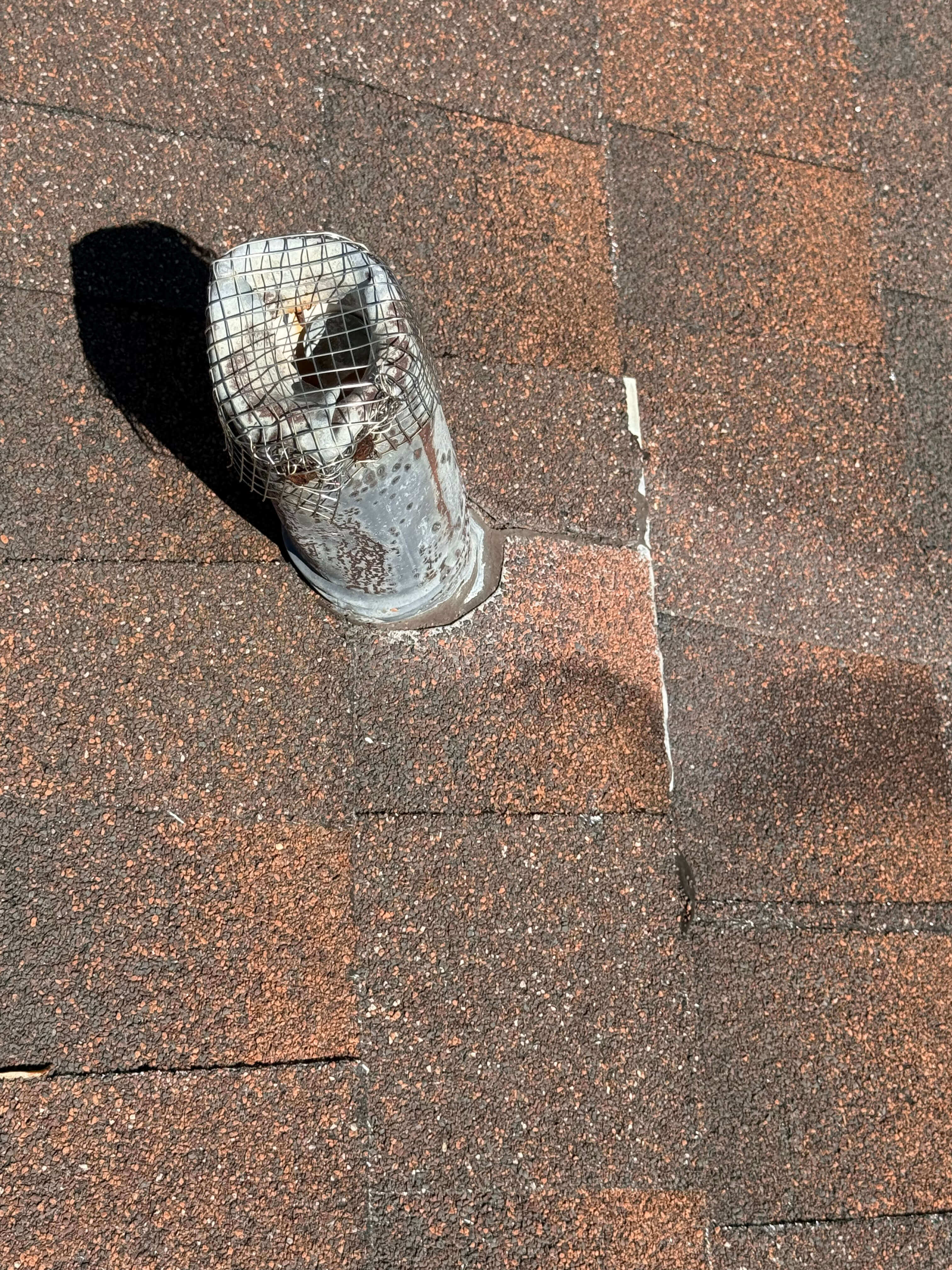
Insurance pressure forcing rushed decisions
Carriers are flagging roofs over 15 years regardless of condition. This creates artificial urgency that doesn't always align with actual roof health.
None of these are emergencies. But they are decision points.
How Much Does Shingle Roof Replacement Cost in Naples?
Most shingle roof replacements in Naples run between $12,000 and $28,000, depending on size, complexity, and material grade.
That's a wide range because roofs vary widely. A 1,800 sq ft ranch with simple lines costs very differently than a 3,200 sq ft home with multiple hip and valley intersections.
Rather than guessing, you can use our Roof Online Quote Tool to model a personalized range for your specific home. The tool uses your roof size, slope, and typical scope requirements to generate a likely price range before you commit to anything.
It's not a final quote. Details like deck condition, ventilation needs, and flashing complexity still require a physical evaluation. But it gives you a realistic starting point for planning.
How Long Do Shingle Roofs Typically Last in Southwest Florida?
Manufacturer warranties often advertise shingles as "25-year" or "30-year" products. In real-world Southwest Florida conditions, actual service life is usually shorter.
In practice, many architectural shingle roofs in Naples perform well for roughly 15 to 20 years, while builder-grade shingles often fall closer to the 12 to 15 year range. These are not hard limits. Installation quality, ventilation, exposure, and maintenance all play a role.
Two roofs of the same age can perform very differently, which is why age alone is a poor decision-making tool.
Are Shingle Roofs a Good Choice for Naples?
Yes. When installed and maintained properly, shingle roofs perform well in Southwest Florida.
They're the most common roofing material in Naples for good reasons: lower upfront cost than tile or metal, easier to repair, and well-suited to our climate when the installation details are done right.
The key is understanding what "properly installed and maintained" actually means in Florida. That's what separates a shingle roof that lasts 12 years from one that performs well for 18 to 20.
Most of the issues we see aren't inherent to shingle roofs. They're the result of:
- Poor installation (wrong ventilation, inadequate flashing, shortcuts on underlayment)
- Deferred maintenance (ignoring small problems until they become big ones)
- Using the wrong shingle grade for our climate
A quality shingle roof replacement, done right, gives you solid performance at a reasonable cost.
When Replacing a Shingle Roof Makes Sense (and When It Doesn't)
Replacement often makes sense when several factors align at the same time. This might include a roof that's approaching the end of its typical service life and showing visible deterioration, advanced granule loss that exposes the shingle mat, or shingles that are no longer sealing or holding securely.
Replacement is also commonly driven by context rather than condition alone. For example: repeated reactive repairs, insurance deadlines, or a pending home sale where flexibility is limited.
On the other hand, replacement may not be the right move when the roof is aging but still structurally sound, issues are localized and clearly repairable, and there's no immediate pressure from carriers or storms. In those cases, monitoring and planning can meaningfully reduce risk without forcing an immediate decision.
Age matters, but condition and risk matter more.
Repair vs. Replacement for Shingle Roofs in Naples
This decision is rarely binary.
Repairs can be a smart strategy when they address a clearly defined issue, reduce risk rather than mask it, and intentionally buy time. They become a poor long-term approach when they're frequent, reactive, or used to delay an inevitable replacement while increasing total cost.
The more useful question is often not "Can this be repaired?" but:
"Does repairing this meaningfully reduce risk over the next few years?"
How Long Does a Shingle Roof Replacement Take?
Once work begins, the physical installation is usually faster than most homeowners expect. Many shingle roof replacements are completed within one to two days, depending on size and complexity.
The overall process can take longer when permitting, inspections, and material scheduling are factored in. Weather, roof design, and inspection timing all influence schedules, which is why clear communication matters more than exact timelines.
What a Proper Shingle Roof Replacement Should Include in Southwest Florida
A quality shingle roof replacement involves more than installing new shingles. In Southwest Florida, long-term performance is often determined by the details.
A complete scope should account for:
- Proper starter strips at eaves and rakes
- Underlayment suited to local conditions
- Flashing at penetrations and transitions
- Balanced ventilation
- Edge details designed for wind-driven rain
These components often have a greater impact on longevity than the shingle brand itself.
Permits and Inspections in Naples
In Collier County, shingle roof replacements require permits and inspections. While this can feel inconvenient, the intent is to verify basic life-safety standards, document work for insurance and resale, and protect homeowners from shortcuts that aren't visible after installation.
Unpermitted roof work frequently becomes an issue later, particularly during insurance reviews or home sales, even when the roof appears fine.
Insurance Considerations in Florida
Roof age plays a disproportionate role in Florida insurance decisions. Many carriers flag shingle roofs over 15 years old, sometimes regardless of actual condition.
However, Florida law protects homeowners: If your roof is 15 years or older, you have the right to obtain a roof certification from a licensed roofer or inspector. If the certification shows your roof has at least 5 years of useful life remaining, the insurance carrier cannot non-renew or refuse coverage based solely on roof age.
The requirements vary by carrier:
- Some request a roof certification (inspection confirming remaining useful life)
- Others may still require full replacement as a condition for new policies or renewals
- Each carrier sets their own underwriting standards within legal limits
This creates real pressure. But understanding Florida law and your carrier's specific requirements before you get a notice puts you in control of timing.
If you know your carrier's policy early, you can:
- Get a roof certification if your roof still has serviceable life
- Plan a replacement during dry season (if needed)
- Get multiple bids instead of accepting the first quote
- Avoid the premium spike that comes with last-minute changes
Rushed decisions usually cost more, both in money and stress.
Note: Insurance requirements vary by carrier and policy. Confirm your carrier's specific roof requirements directly with your insurance agent.
How Rectangle Thinks About This Decision
We don't push replacement. We also don't delay it when it makes sense.
Our role is to help you understand:
- What's known (current condition)
- What's uncertain (likely timeline to failure)
- What's changing (risk profile over next 2 to 5 years)
From there, the decision usually becomes much clearer. You might replace now, repair strategically, or plan for 18 months out.
A roof doesn't need to be perfect to be serviceable, and it doesn't need to be leaking to justify replacement. The right decision depends on risk tolerance, timing, ownership horizon, and how much uncertainty you're comfortable carrying.
Next Steps
If you're early in the process, our Roof Online Quote Tool can help you model a likely price range based on your home.
If you want to reduce uncertainty, you can Schedule a Roof Inspection to confirm scope, risk, and next steps.
Either way, understanding your roof puts you back in control instead of reacting to insurance letters or ceiling stains.
![[team]](https://cdn.prod.website-files.com/68d19adb47661a1815781c09/68d19d8fe256f42e74962603_7b1b5438-10a2-42fe-b663-8bca344ae829.avif)