
ROOF LEAK, STORM & TILE REPAIR
Get an honest, photo-documented diagnosis of what's actually wrong with your roof, and a straight call: repair, replace, or wait. No upsells, no guessing. Just a clear answer and a fast fix, and proof it's actually fixed.
Slipped tile, a ceiling stain, or need a second opinion on a scary quote? Request your photo-documented diagnostic report today.
WHY BONITA ROOFS LEAK WHERE THEY DO
Bonita caught the hardest edge of Hurricane Ian, and a lot of roofs here got "fixed" fast in the scramble after. Some were done right. Many weren't, and those are the leaks we get called for now. Where your roof fails depends on where in Bonita you live:
On the water (Barefoot Beach, Bonita Beach, the older west-of-41 streets like Arroyal): salt air eats fasteners and flashing first. The tile or metal can look fine from the street while the hardware underneath corrodes, and the leak shows up at a penetration or ridge long before anything looks wrong.
In the newer gated communities (Seasons at Bonita, Village Walk, Bonita Landing): the failure isn't age, it's the details. Roof-to-wall connections, valley flashing, and underlayment aging out faster than a roof that new should. A few slipped tiles aren't the problem; they're the warning that the waterproofing under them is going.
In the established communities (Hunters Ridge, Worthington): end-of-life tile. Tired vents, loose hip and ridge, crumbling rake mortar, and the flat lanai sections where water actually gets in.
We don't guess which one you've got. We find it.

A pattern we keep seeing in Bonita: roofs on newer tract-built homes leaking years before they should, at the roof-to-wall connections, the valleys, the flashing, the pipe penetrations. If your roof is under ten years old and already staining a ceiling, you're not imagining it, and you're probably not the only house on the street.
The main house next door is standing seam, with no active leak yet. Up top the ridge cap was bent and lifting and the EPDM pipe boot had dried out and cracked, both a season or two from letting water in. We re-set and re-sealed the ridge, secured the loose fasteners, and swapped the boot before any of it became a leak. The cheapest roof repair is the one you do before the leak.
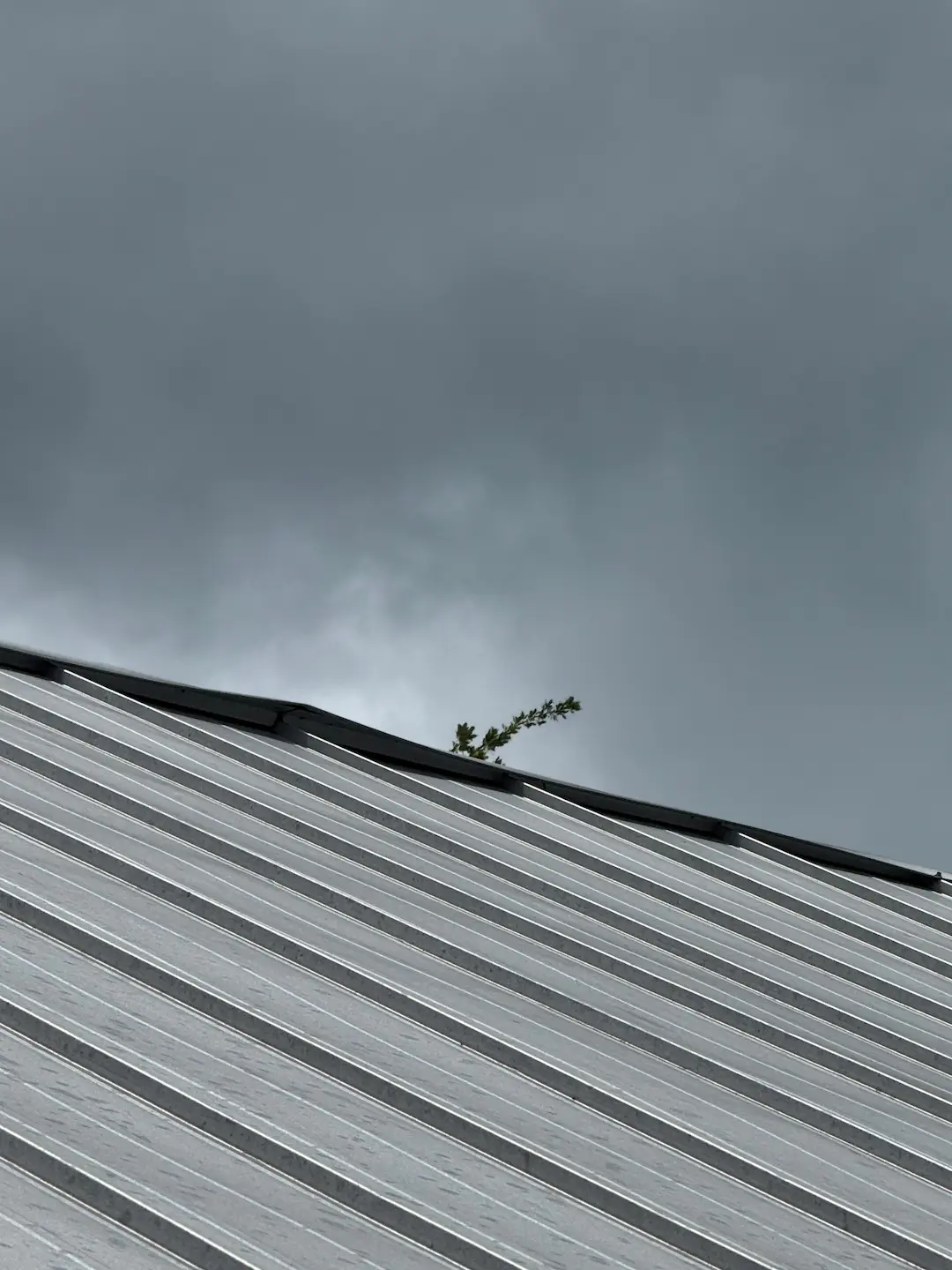
Ridge cap bent and lifting
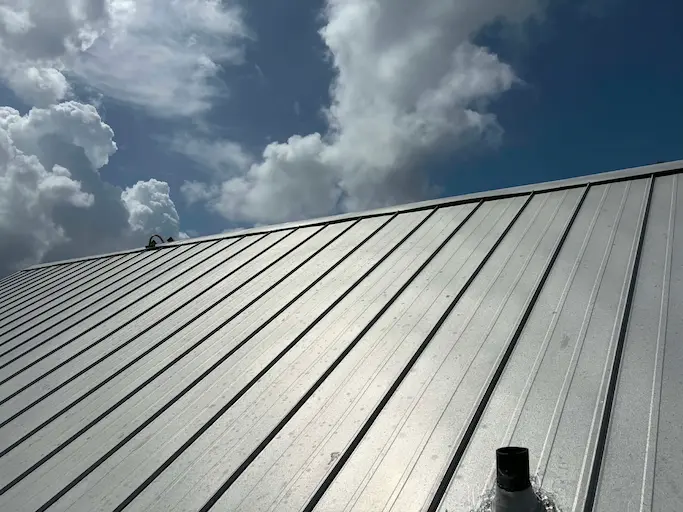
New fasteners installed and secured. Watertight before any leak.
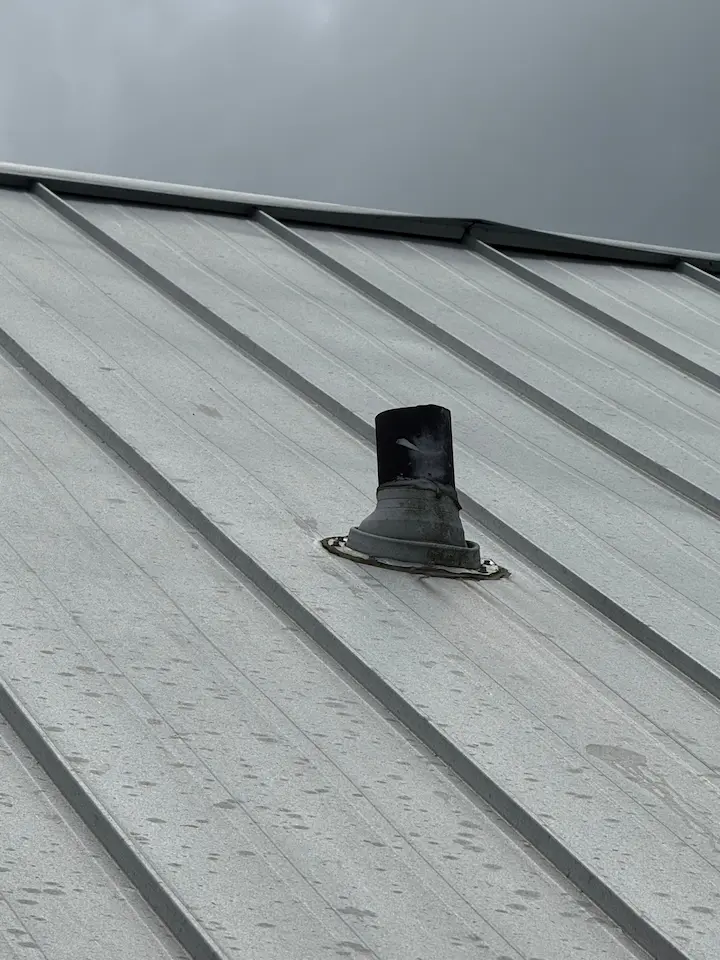
Original pipe boot, dried out and cracking at the base.
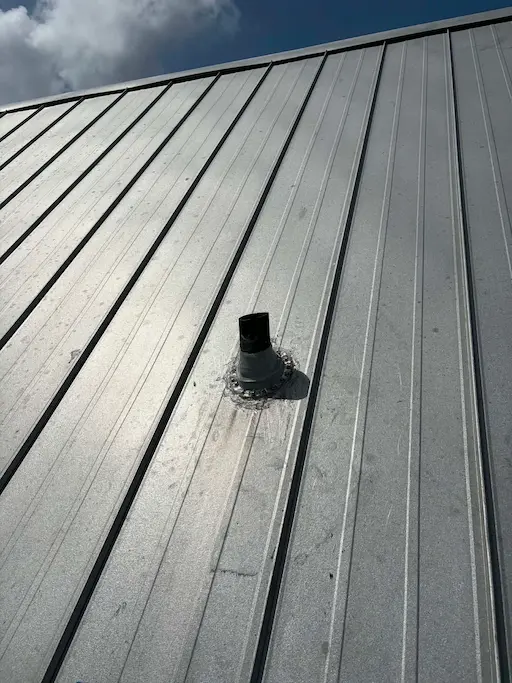
New boot set and resealed. Caught before it could crack open.
West of 41, minutes from the water, where salt reaches the metal first. The detached office roof was already leaking, an exposed-fastener system where the foam closures and fasteners are the first thing the salt air eats. We replaced the inside and outside foam closures and the worn fasteners, and closed the path the water was taking in.
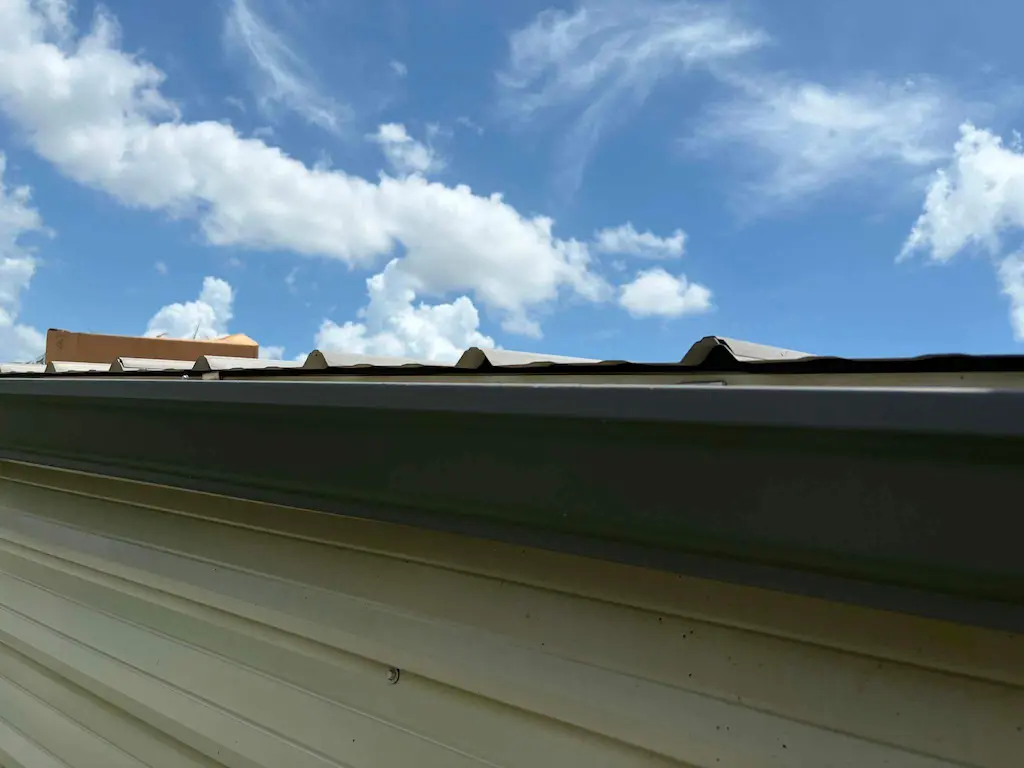
New inside foam closures at the eave where they were missing from installation.
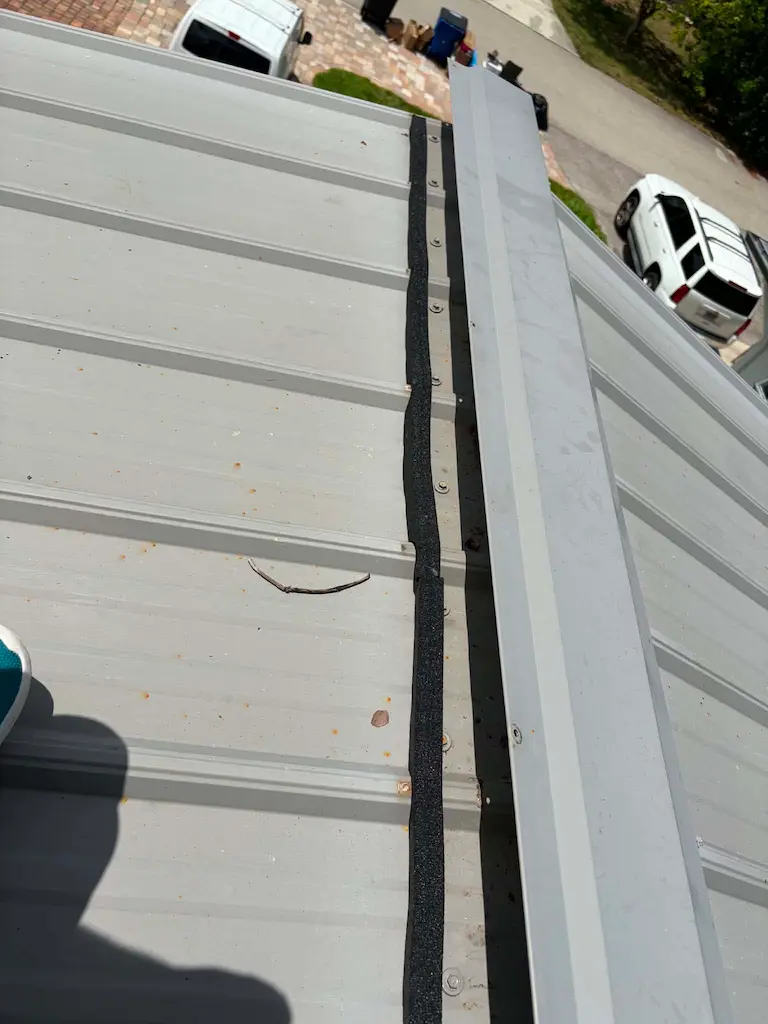
New outside foam closures up at the ridge, under the cap, where the roof was leaking.
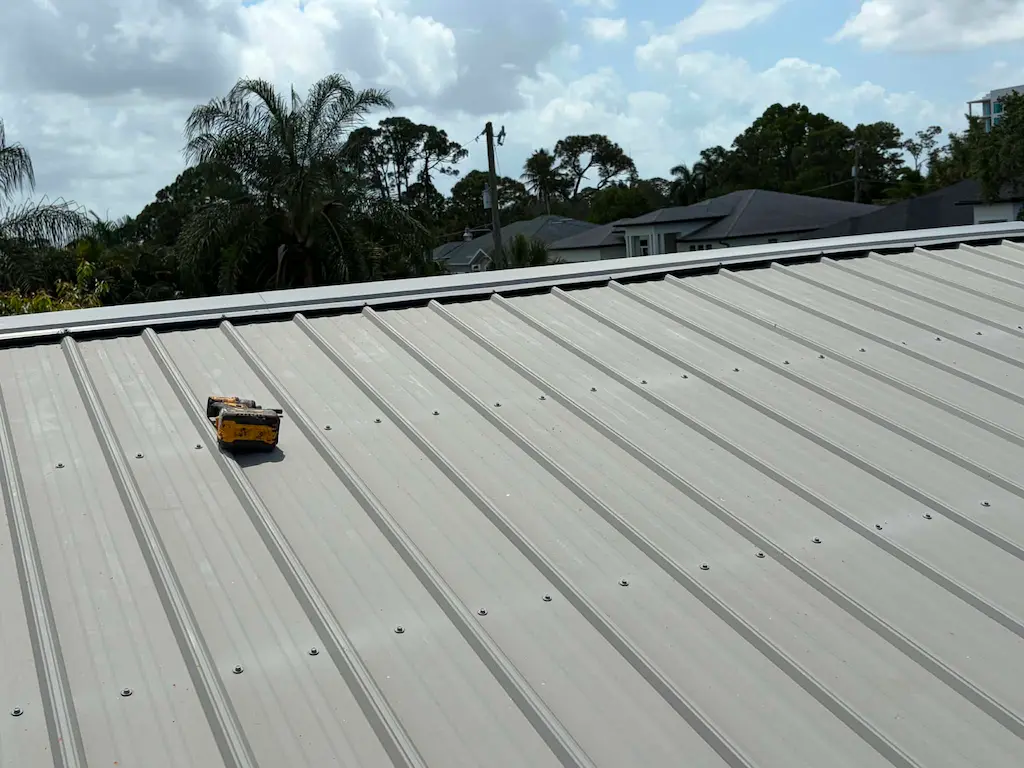
Worn fasteners backed out and replaced, so every screw seals tight again.
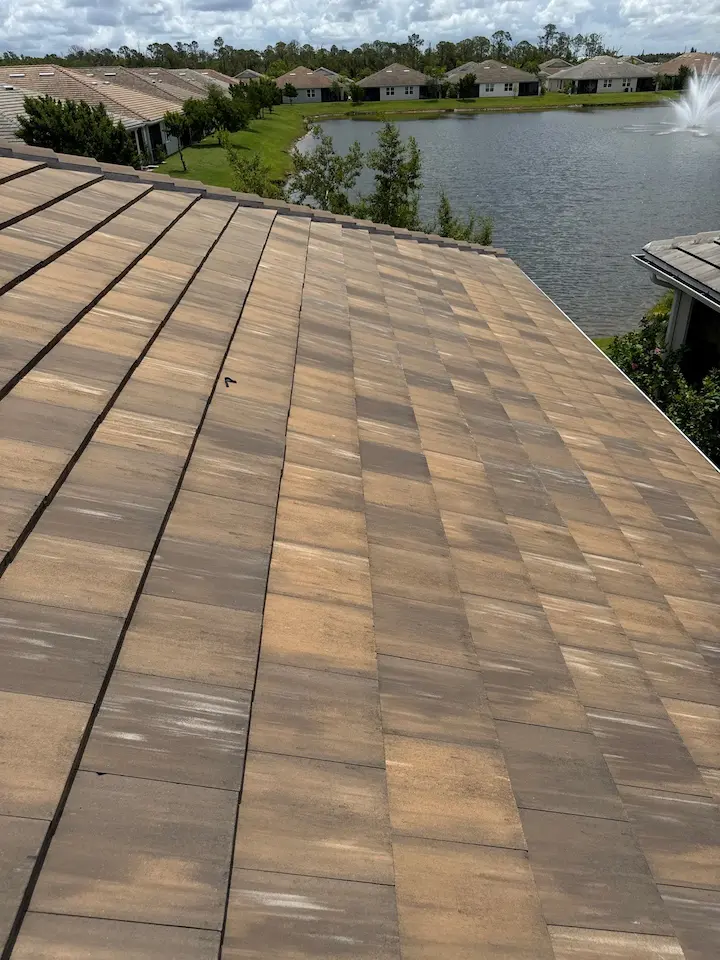
A six-year-old tile roof with no active leak yet. The owner wanted to stay in front of one, so we replaced broken field tiles and shored up the spots most likely to let water in first. The cheapest roof repair is the one you do before the leak.
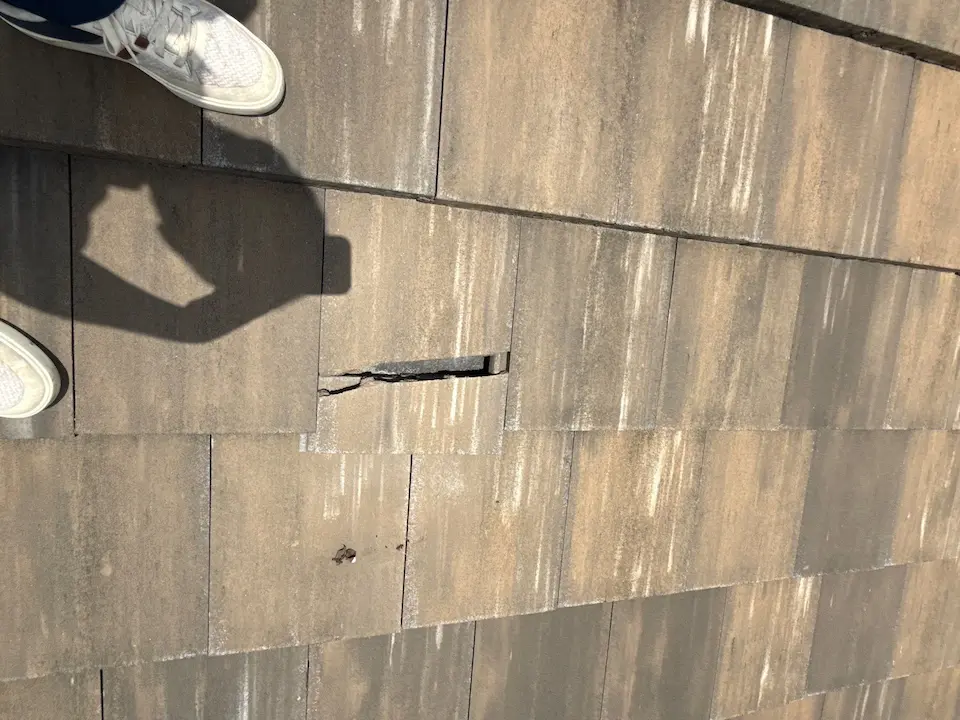
Cracked field tiles, the spots water finds first. Caught before any leak started.
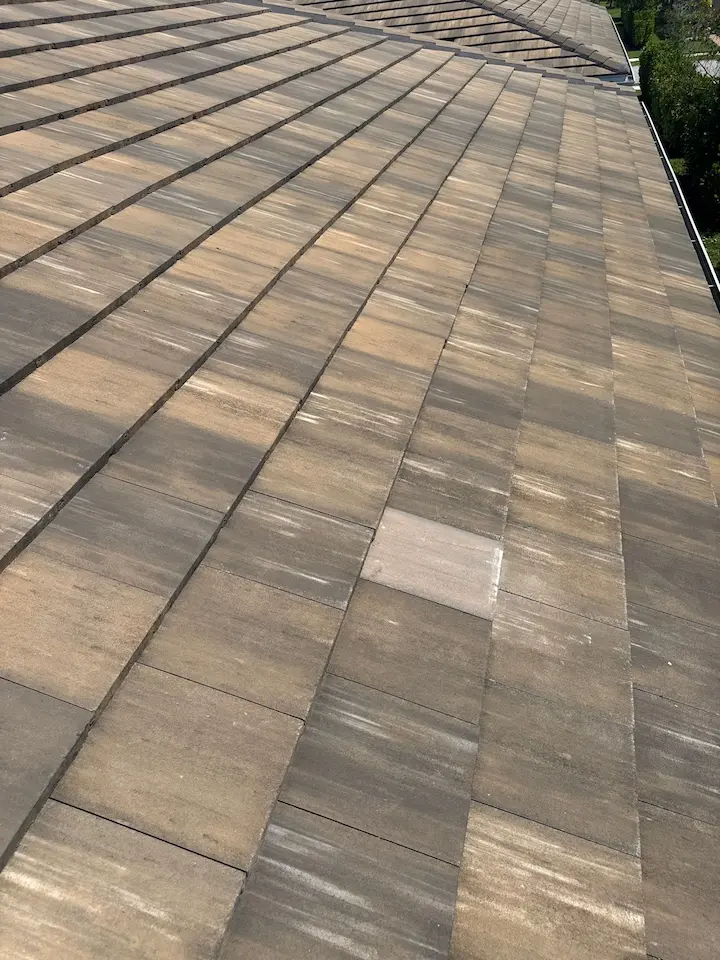
Broken field tiles, the spots water finds first. No leak yet.
A barely four-year-old tile roof, already leaking. We opened a 5'×5' section of field tile, traced the active leak deck warping that pieced a hole in the underlayment, and tied a new self-adhered membrane patch into the existing underlayment before re-setting the tile. We also documented what the emergency repair didn't cover: bowed decking past the leak zone, about fifteen cracked or slipped field tiles, and construction debris left under the field. The owner got a written record of all of it. Two repairs done in this community.
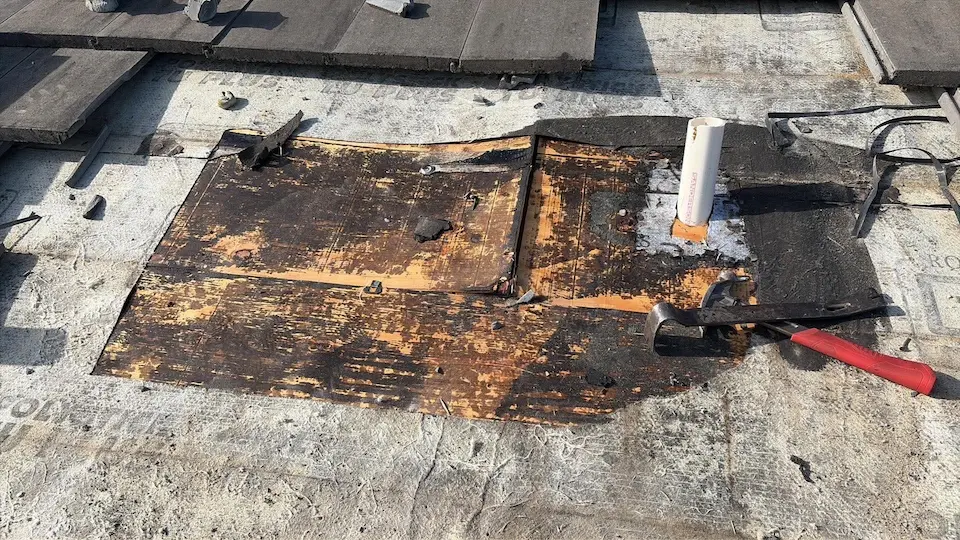
Warped decking and a failed pipe boot. The source of the leak.
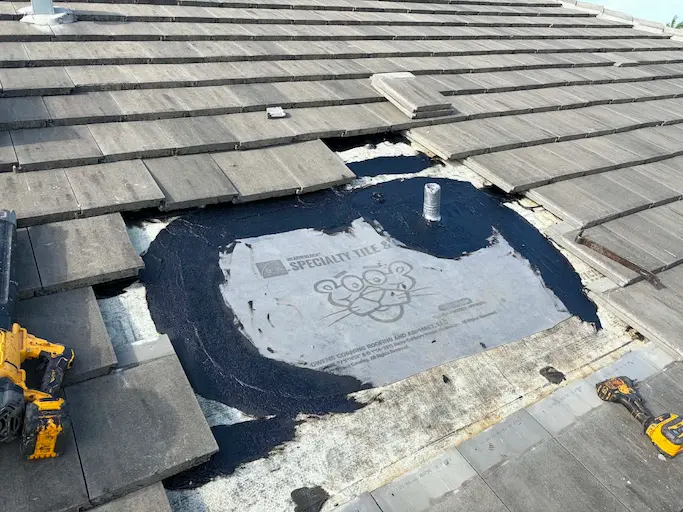
Decking rebuilt flat, new pipe boot and underlayment in. Watertight.
An established-community tile roof in the back half of its life. Off-ridge and gooseneck vent replacement, hip-and-ridge re-securement, field-tile repairs, and about 120 linear feet of rake-mortar restoration, all foam-set to current practice with a defined decking allowance so there were no surprise charges.
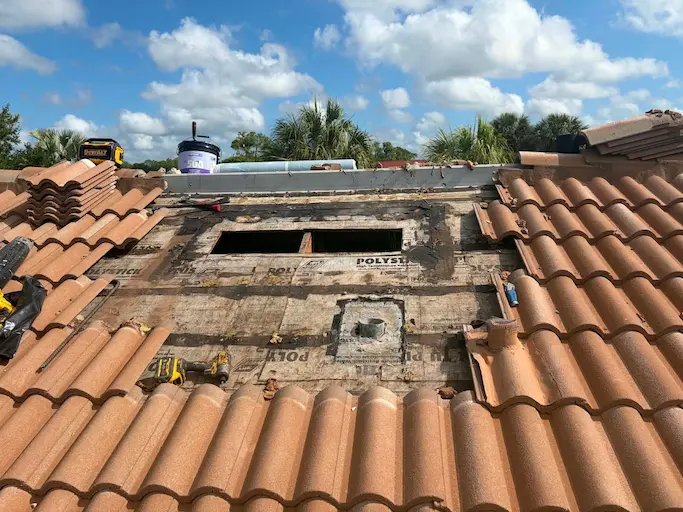
Leak traced to two failed vents. Tile pulled, old penetrations cut out, fresh peel-and-stick underlayment run across the deck before anything went back.

New off-ridge and gooseneck vents in, tile relaid and blended. Watertight, no sign we were there.
WHAT WE REPAIR IN BONITA SPRINGS
One Roofer. All Documented.
The hard part of a leak isn't the patch, it's finding where the water actually enters, which is almost never where it drips. We trace it to the real source first.
Lifted, cracked, or missing tiles and shingles, displaced ridge, flashing peeled back by wind. We check the whole field, not just the spot you can see.
Cracked, slipped, or broken tiles, plus the underlayment failures hiding under tiles that still look fine. We match what we can, and tell you straight when underlayment has aged past what a tile swap will fix.
Blown-off, curling, or cracked shingles, exposed nails, and worn spots around penetrations. Quick to fix when caught early, and we'll flag it honestly when a roof is too close to end-of-life for repairs to make sense.
Loose or backed-out fasteners, failed foam closures, worn grommets, and seam or flashing issues. Salt country is hard on metal hardware, so we repair the system, not just the panel.
On 5V-crimp and other exposed-fastener roofs, the screws back out and start leaking at every penetration, usually around year 10 to 12. We don't just reseat the old hardware: we re-screw the whole roof with oversized stainless steel fasteners (a #10 or #12 replacing the builder's #9s) and new EPDM sealing washers, so they bite clean wood and won't rust out the way the builder-grade ones did. It costs a fraction of a replacement and buys the roof years.
Where water actually gets in: valleys, chimney and wall flashing, and roof-to-wall connections, the early-failure point on a lot of Bonita's newer roofs. We re-flash to spec, matched to your roof's metal to stop galvanic corrosion.
Penetrations are where most "mystery" leaks start. Cracked pipe boots, failed vent flashing, and leaking skylights, replaced and re-sealed per spec with the surrounding tile or shingle re-set properly.
Lanai roofs, Florida rooms, and low-slope sections: the most common true leak source on a SWFL home, and the one most roofers handle worst. Modified bitumen and TPO repaired to the system's actual spec.
A sound but aging flat roof usually doesn't need tearing off. It needs a coating. We apply silicone and elastomeric systems that seal seams and penetrations, stop UV breakdown, reflect heat, and add years of life for a fraction of a replacement. The honest part: a coating only works over a roof that's still structurally sound. If the deck or membrane underneath is already gone, we'll tell you, because coating a failed roof just hides the problem until it's worse.
No active leak yet? The cheapest repair is the one you do before the leak. We re-secure loose tiles, hip and ridge, refresh rake mortar, and shore up the spots most likely to let water in first, common on newer roofs that just need to stay ahead of it.
Active leak or storm damage right now? We respond fast and, most of the time, just fix the leak on the spot. If the damage is too big to finish in one visit, we'll tarp it to protect the interior and come back to complete the repair. Either way, the water stops today.
REPAIR OR REPLACE?
We don’t expect you to just take our word for it when we get down from your roof. Before we quote a single dollar for a repair, we’ll pull up the photos we just took on our phone or tablet and walk you through exactly what’s going on up there. Our standard onsite look covers:
Visual Proof: Clear, close-up photos of the specific leak source, slipped tile, or cracked boot so you see exactly what we see.
A Straight Call: An honest assessment of whether the issue is a straightforward, localized fix or if the underlayment is truly failing across the deck.
No Forced Replacements: If a $1,200 repair buys your roof five more good years, that’s the call we make. We don't guess, and we don't invent problems just to force a reroof.
HOW WE REPAIR
We trace the leak or damage to where it originates, not where it shows. Most of the job is finding the right problem.
Time-stamped photos of the damage and the conditions around it, for your records, and your own eyes.
We pull the Lee County or City of Bonita Springs permit when the scope calls for it. No unpermitted work that flags your home during a future sale or insurance audit.
Fixed to manufacturer spec and current code: flashing matched to the surrounding metal, underlayment and fasteners rated for this climate.
We confirm the repair holds before we call it done, not just that it looks right.
Photos of the finished repair and a record of what was done, so the next person up there, including us under warranty, knows exactly what's underneath.
ROOF REPAIR QUESTIONS
Most small repairs run $800 to $3,000. Larger section repairs range $3,000 to $8,000+ depending on the roof type and scope. A single pipe boot replacement is on the lower end, while repairs involving underlayment, multiple failure points, or significant tile replacement run higher. You'll see the full line-item quote before any work begins.
Once the repair reaches 2 squares (200 square feet) or more, yes. Bonita Springs requires a permit at that point, pulled in the contractor's name, not yours. Smaller spot repairs generally don't need one. That's a separate threshold from the 25% rule, which governs when a repair has to be brought up to full current code. We handle the permit when it applies and tell you up front which rule your repair falls under.
When more than 25% of a roof section is repaired in a 12-month period, Florida code can require the whole section brought up to current standard, unless your roof was already built to the 2007 code or later. We check this before any work so there are no surprises.
Fast. Active leaks are our priority: we get out and, in most cases, fix the leak the same day. If it's too big to finish on the spot, we tarp it to stop the water and come back to complete the repair. Call (239) 206-6916, tell us it's actively leaking, and we'll move.
Almost certainly the underlayment. Tile is waterproof, but the membrane underneath it has a shorter lifespan, typically 20-25 years in Florida's heat. When it fails, water gets through even though the tile above it looks perfect. One of the most common issues in Bonita Springs.
For shingles, matching is usually straightforward. For tile, it depends on the age and type. Standard concrete tiles are readily available. Older or discontinued tiles can be harder to source, but we maintain salvage inventory of discontinued profiles when available.
Yes. Initial repair inspections are free. We'll come out, assess the issue, photograph findings, and provide a clear quote before any work begins. You only pay if you move forward with the repair.
Tell us what's going on. We'll get back to you right away.
NEED A FULL REPLACEMENT?
When your roof needs more than a repair, we install all major roofing systems with the same documented process.
Send us what you’re seeing. For many common repairs, we can define the likely scope from photos and measurements. If the leak path is uncertain, we’ll help determine the right next step.
Call us directly. We handle emergency tarp installation for active leaks and storm damage.
![[team]](https://cdn.prod.website-files.com/68d19adb47661a1815781c09/68d19d8fe256f42e74962603_7b1b5438-10a2-42fe-b663-8bca344ae829.avif)